The Six O'Clock Handover: When the Espresso Machine Cools and the Street Moves In
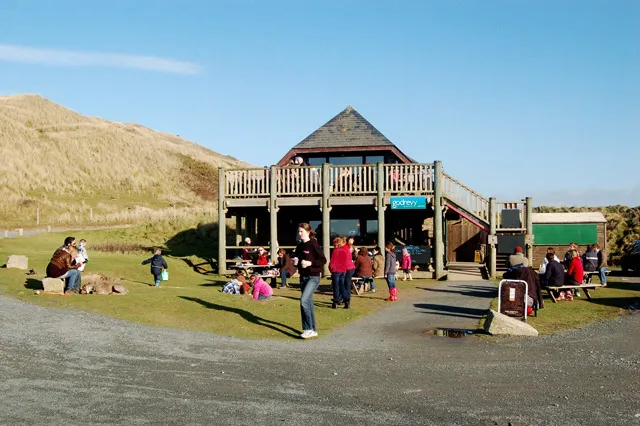
Photo: Andy F, CC BY-SA 2.0, via Wikimedia Commons
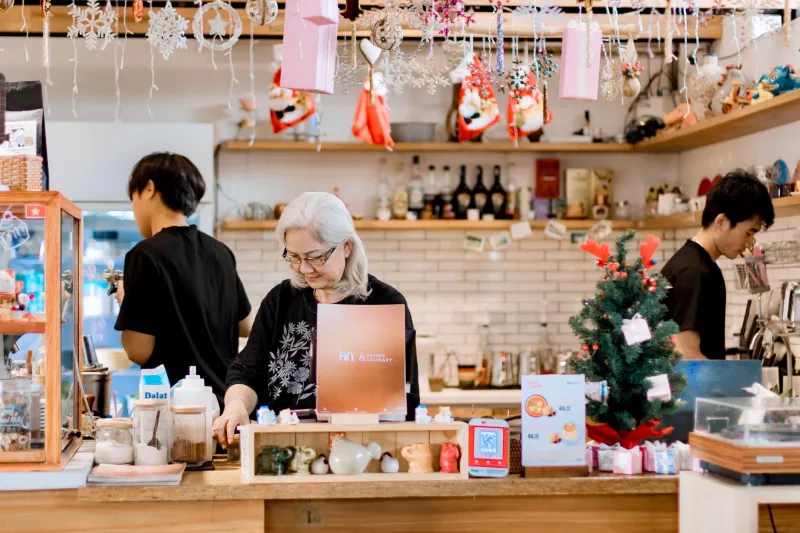
There is a moment, usually just after six, when a cafe changes hands without any money changing hands. The espresso machine has been backflushed. The pastry tray is down to a lonely croissant and a flapjack. Someone is stacking chairs. Then the door opens, and a woman with a carrier bag of wool asks whether the back table is free. It is. It has been, quietly, since half five.
This is the evening handover. It happens in cafes up and down the country, from big-city neighbourhoods to small market towns, and it is one of the most underrated things a high street does. The daytime cafe — laptops, takeaway cups, a queue that peaks at 8.40am — becomes something else entirely. A front room. A meeting place. A room above the shop, except there is no room above the shop anymore.
The last laptop closes
You can spot the change if you know what to look for. The music might stay the same, but the volume drops. The lights get warmer, or one bank of them gets switched off. A member of staff starts wiping tables with a bit more purpose, not because they want you gone, but because they know what is coming next. The six o'clock crowd is not the same as the four o'clock crowd. It arrives in twos and threes, carrying things: knitting needles, a battered copy of a novel, a folder of minutes from the residents' association, a pack of flashcards for a language exchange.
In one cafe I know, the knitting group has the table nearest the window because the light is better. In another, the book club takes the long bench at the back because it can fit eight people and a plate of biscuits. The language exchange spreads out like a game of musical chairs, pairs moving around every twenty minutes, a Spanish speaker helping someone with their subjunctive while a Polish speaker explains the difference between 'cheeky' and 'cheap'. None of this is advertised on the menu board. It does not need to be.
A different kind of regular
The people who come at six are regulars, but they are not always regulars in the daytime sense. They might buy one pot of tea between four and stay for two hours. They might order a slice of cake and then ask for four forks. They are not high-spend customers in the way a Saturday brunch crowd is. But they are loyal in a deeper way. They are the people who notice when the cafe is closed for a week in August. They are the people who bring a card when a staff member leaves. They are the people who will recommend the place to a friend not because the coffee is the best in town — though it might be — but because it feels like somewhere you can sit without being asked to move along.
For the cafe, the evening handover is a quiet bit of business sense. A room that would otherwise be empty at 7pm is suddenly full of people buying hot drinks and cake. It is not a pub crowd, so there is no rush, no spillage, no last-orders scramble. It is a gentler trade. But it is trade. And it keeps the lights on in the dead hours between lunch and closing.
What the cafe gets back
There is also the thing that is harder to put on a spreadsheet: goodwill. A cafe that hosts the residents' association meeting becomes part of the street's infrastructure, not just its coffee supply. It becomes the place where the Christmas lights get organised, where the pothole campaign starts, where the library closure is discussed. That is a lot of social capital for a few extra teapots.
Staff tend to like it too, as long as it is managed well. A good evening group is self-organising. It does not expect table service. It clears its cups. It knows where the biscuit tin lives. It asks before moving the furniture. The best groups have a named contact, a regular night, and an understanding that if the cafe is having a quiet week, they will still turn up and buy something.
How to spot a takeover
If you are new to an area, look for the signs. A handwritten notice near the till: 'Book club — first Tuesday, 6.30pm, all welcome.' A stack of chairs pushed against the wall at an angle that suggests they get moved regularly. A shelf of mugs that do not match the others. A member of staff who says, 'Oh, you're here for the knitters?' before you have said a word.
You can also just ask. Cafes are used to it. The question 'Do you have any groups in the evening?' will usually get you a list, a name, and sometimes a phone number on a Post-it note. The neighbourhood cafe is a noticeboard with a coffee machine, and the evening handover is how that noticeboard comes alive.
Starting your own six o'clock club
If there is no group and you want one, the first step is not a Facebook post. It is a conversation with whoever is behind the counter at 3pm on a Tuesday. Ask what nights are quiet. Ask whether they would mind a group of six or eight taking the back tables for an hour and a half. Ask whether they would rather you bought drinks at the counter or at the table. Then pick a date, put a sign in the window, and accept that the first meeting might be three people and a very long chat about whether anyone has read the book.
The second meeting is usually bigger. The third is when someone brings biscuits. That is when you know the handover has worked. The espresso machine is off, the chairs are out, and the street has found its front room again.