Ladle Truths: Reading a November Soup Board Like a Local
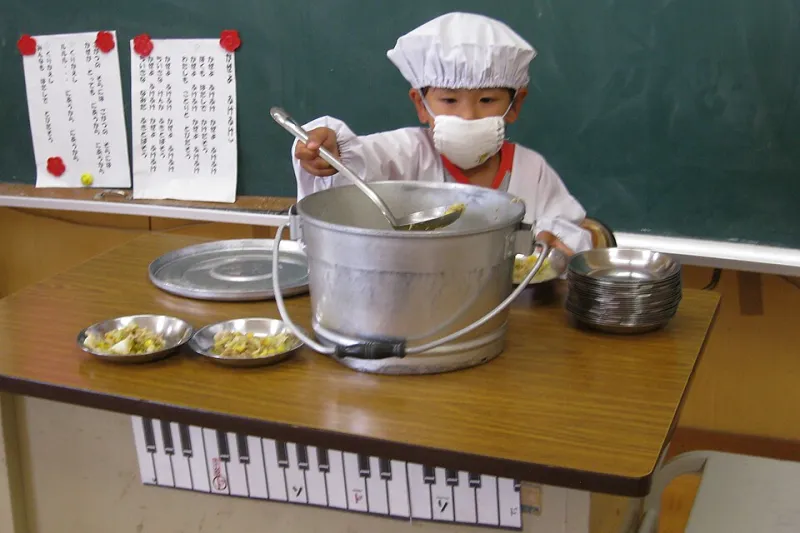
Photo: AHLN, CC BY 2.0, via Wikimedia Commons
There is a moment, somewhere in early November, when the chalkboard outside a cafe changes character. Through September it was aspirational — peaches, heritage tomatoes, a bit of burrata. By the second week of the month it has become a weather report, a shopping list and a small confession, all in four lines of handwriting.
The soup of the day is the most honest thing on any cafe menu. It's cheap enough that nobody expects theatre. It's made in batches. It's made from whatever came in that morning. And because it's written fresh each day, in chalk, by a person standing up, it tends to say more than the laminated menu ever will.
Four lines of chalk, quite a lot of information
Read a soup board the way you'd read a note left on the kitchen table. The content matters, but so does the phrasing.
"Soup of the day — ask." Sometimes charming, usually a sign that the board was written at 8am before anyone had decided. Fine if the kitchen is good. Worth a question.
"Today's soup: leek, potato, thyme." This is the language of a kitchen that cooked something this morning and knows exactly what's in it. Three ingredients, no adjectives. Trust it.
"Homemade soup." A word that has quietly lost its meaning. Everything is homemade by somebody. Look for specificity instead — a named vegetable, a farm, a market, a variety. "Crown Prince squash" beats "seasonal squash" every single time, not because the squash is better but because somebody bothered to know.
"Soup with crusty bread and salted butter — £6.50." The price-and-bread line, oddly, tells you almost as much as the soup. A cafe that specifies the butter is a cafe that has thought about the sandwich.
Follow the vegetables
November is the easiest month of the year to spot a shortcut. The good stuff is right there in the shops: cavolo nero, celeriac, parsnip, swede, leeks by the armful, squash piled up outside the greengrocer with a hand-written label.
A board that stays on tomato and basil into the third week of November is not reading the room. A board that has moved to roasted parsnip with honey, or a rough celeriac and apple number, or a proper ribollita with the last of the cavolo nero, is a kitchen with somebody paying attention at the market.
You can go further. A soup that names a single vegetable and then lists nothing else — just "celeriac" — is usually confident. A soup with five ingredients listed in a row, all competing, is often a soup made from what needed using up. That can be delicious. It can also be a shrug in a bowl.
The batch rhythm
The great tell of the soup board is repetition.
Most neighbourhood kitchens make soup in a big pot and serve it over two days. That's sensible, economical, and entirely fine — a soup made on Monday and served on Tuesday is often better for the sitting. The question is what happens on Wednesday.
If the board reads the same on Wednesday as it did on Monday, and the texture has gone slightly thicker, and the garnish has quietly vanished, you're looking at a pot that's now three days old. Not dangerous, not dishonest, just tired. If it reads differently every day, somebody is making a fresh batch each morning, which is more work than it looks and worth paying for.
There's a middle path, and it's the most common one: two soups in rotation, one vegetable-based and one lentil or bean, made on alternating days. That's a kitchen running a tight ship. Look for it.
The bread question
Here's where the soup board and the kitchen really give themselves away.
A bowl of soup with two slices of sliced white from a bag is a bowl of soup with sliced white. Nobody's pretending otherwise, and at £5 it's fair enough. But when the bread is from the bakery two doors down, when there's a decent salted butter rather than a foil packet, when the toast is actually toasted and not merely warmed — that's a kitchen that understands the soup is only half the lunch.
Ask yourself one question as the bowl lands. Does the bread arrive at the same time as the soup, or after? If it's after, someone has been thinking about the sequence of your lunch, which is the sort of thoughtfulness that tends to show up elsewhere too.
Three shortcuts you can taste
Not every corner is cut visibly. A few things give it away on the spoon.
- Over-smooth, uniform texture with no body. Blended to death and thinned with stock. Often the mark of a soup made in quantity and held warm for hours.
- Salt doing all the work. If the first mouthful is salty and the second is thin, there's not much underneath.
- A garnish that has clearly been sitting. A swirl of cream that's started to skin, or herbs that have gone dark at the edges, tells you when the bowl was assembled.
None of these are crimes. But a cafe that avoids all three, in November, at seven quid, is doing something quietly impressive.
How to order well from a soup board
Ask what's in it. Just that, cheerfully, at the till. Nobody minds. You'll learn whether the person serving you knows, which is information in itself — and if they say "hold on, I'll check," you've found a kitchen worth coming back to.
Take the bowl-in and the bread. Sit near the window, where the light is bad in November and the street is at its most interesting. Order a second coffee.
And if the board says celeriac, say yes. It's the one vegetable that never lies.