Twenty Paces to the Counter: What the Sunday Queue Tells You About a Street

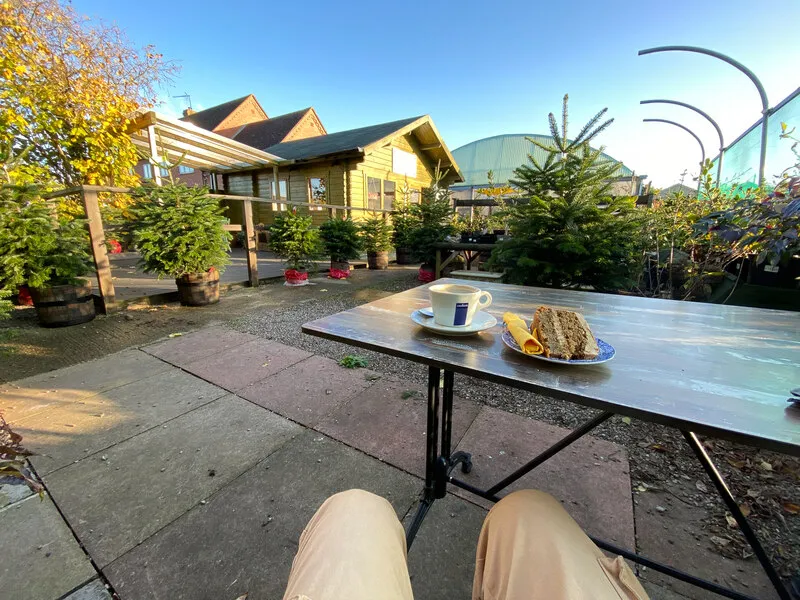
Photo: queue outside independent coffee shop Sunday morning UK high street dog walkers, via upload.wikimedia.org
Nine fifty-two on a Sunday, and there are seven people on the pavement outside a cafe that seats twenty-two. Nobody looks annoyed. A collie is tangling itself around someone's legs. A man in cycling gear is holding the door for a family with a buggy, which is a bit like holding a door for a removal van. Inside, the steam on the window has reached the stage where you could write your name in it, and somebody has.
Sunday morning is the only time a British high street queues voluntarily for something it doesn't need. No ticket, no appointment, no bus to catch. Just a queue, and a fairly cheerful one.
The Nine-Forty Problem
Every cafe owner will tell you the same thing about Sunday: nothing happens, nothing happens, then everything happens at once. Quiet until twenty to ten, then a fifteen-minute window in which the entire neighbourhood decides to have a flat white simultaneously.
The queue isn't really about coffee. It's a synchronisation problem. Park runs finish, dog walks loop back, church lets out, the swimming lesson ends, and the paper shop closes — and all of those things funnel past the same three doors on the same stretch of pavement between 9:40 and 10:20.
Who Queues, and What They Order
Watch for an hour and the categories start to sort themselves.
The park-run refugees arrive first, still pink, ordering the largest possible coffee and something with eggs on it. They are the most nutritionally smug people in the queue and they've earned it.
The dog walkers come second, in waterproofs, ordering a bacon roll and a puppuccino they'll pretend was for the dog. They know the staff by name and occupy the two seats by the door, which is the correct allocation of resources.
The cycling club arrives as a block, in matching jackets, taking up the back half of the room and ordering in a way that makes the till person's eye twitch. Fair play to them; they've cycled eighteen miles and they're paying for it.
The hungover pair order two bacon rolls and a can of full-sugar something, speak in whispers, and leave a tip out of pure gratitude.
The solo reader has timed it badly and knows it, and will hover near the pastry case pretending to consider the almond croissant until a seat frees up.
And then there's the one who orders six drinks. There is always one. They are doing something kind for a house full of people and they will not have written the order down.
The Ten-Fifteen Lull, and Why It Matters
By twenty past ten the queue is gone and the room is full. That's the moment the morning is won or lost. If the flat whites come out in the right order and reasonably fast, the whole room settles into a pleasant hum and stays for another forty minutes. If they don't, you can feel the mood curdle — not into anger, just into that very British quiet disappointment where everyone assures each other it's fine.
By half eleven it's over. Half the tables are free, someone's wiping down, and the same room that felt like a festival forty minutes ago now feels suspiciously calm. Sunday trade is a wave, not a tide, and the good cafes surf it.
The Queue Is a Reading of the Street
Here's the useful bit. A Sunday queue tells you more about a neighbourhood than any regeneration plan.
A queue of mixed ages means the street still works for people who aren't just passing through. A queue with buggies and dogs in it means the pavements are wide enough and the cafe hasn't made itself too precious. A queue where half the people are greeted by name means the place has crossed the line from business to institution.
And a street with no Sunday queue at all is usually a street with a problem — not enough homes, or not enough anyone.
Notes for Cafes: Pacing the Rush
A few things the well-run ones do, observed repeatedly and stolen shamelessly.
- Take orders in the queue. One person with a pad at the door halves the time people stand at the till feeling awkward.
- Split the roles. One on the till, one on the milk. The till person should never steam milk; it's the fastest way to make a queue feel personal.
- Say the wait out loud. "About fifteen minutes for food" costs nothing and prevents a lot of silent seething.
- Batch the pastries. Warm them in trays, not one at a time.
- Water and cups for the queue. Cheap, kind, and it slows the exodus.
- Don't seat people you can't serve. A table given and then ignored is worse than a table refused.
- Protect the regulars' corner. The two old boys who've been in at ten every Sunday since before you owned the place are part of the fixtures. Treat them accordingly.
Notes for the Rest of Us: Queue Craft
Customers have a role too, and it's mostly about not being the person everyone remembers.
Know what you're ordering before you reach the till. If you're ordering for six, say so at the start rather than at the end. Step to the side once you've paid. Don't hover over a table that's clearly got two sips of coffee left on it — go and look at the cake again. Don't ask "is this mine?" while holding a drink you clearly ordered. Keep the dog on the outside of the queue, not threaded through it. And if someone's got a tray and a buggy and a toddler, let them past.
The Ten O'Clock Regulars
The best thing about the Sunday queue isn't the coffee. It's that for roughly ninety minutes a week, the street does something together without being asked. People nod at each other in a doorway. Someone holds the door. Someone else's dog gets complimented. Two strangers share a look of mutual sympathy when the milk runs out.
Then eleven o'clock comes, the queue dissolves, and everyone goes back to their separate Sundays. Until next week, when the same seven people will be on the same pavement, pretending they didn't all arrive at once.