Pinned With Hope: What a Cafe's Corkboard Tells You About Its Street
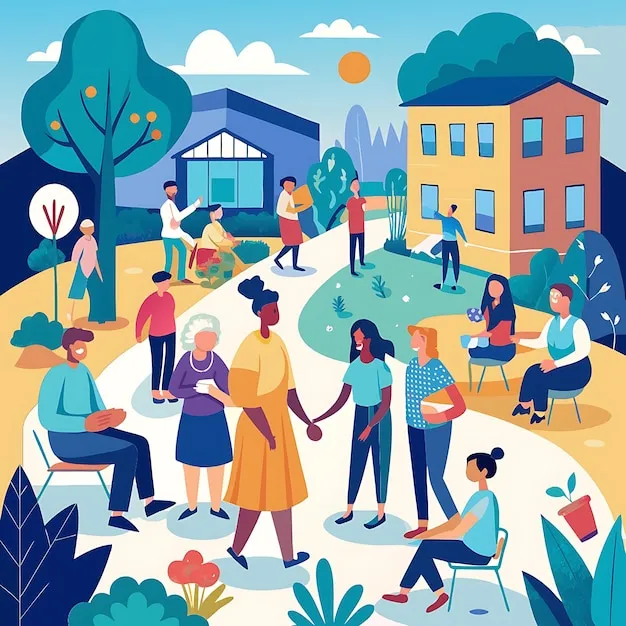
Photo: community noticeboard corkboard with flyers in a UK cafe, via img.freepik.com
Every good cafe has one, and it's almost never where you'd put it if you were designing the place. It's the corkboard by the milk fridge. The one behind the door. The one half-hidden by the coat hooks, so you have to lean in past somebody's wet anorak to read it.
It is, quietly, the most local thing in the building. More local than the coffee, which might come from a roastery two counties away. More local than the cake, which is at least made on site. The board is the only part of a cafe that is entirely made of the street it stands on.
The classifieds nobody pays for
Look closely at any busy board and you'll find it divides into recognisable genres.
The lost and found. A cat, photocopied badly, described with the desperate specificity of someone who means it: 'grey with one white ear, answers to Biscuit, last seen Thursday near the allotments.' Three weeks later, if you're lucky, a handwritten note is taped over the corner: FOUND. Thank you all.
The recruitment drive. The community choir needs tenors. The under-elevens football team needs a coach, ideally one with a DBS check and a car. The pub quiz needs a team that can do the music round.
The free stuff. Sofa, good condition, collection only. Two bags of gravel. A piano that works but is very heavy. This is the informal redistribution network of the British high street, and it runs entirely on goodwill and a bit of Blu Tack.
The classes. Baby massage Thursdays. Life drawing, first Wednesday, all abilities, bring your own board. A six-week beginners' upholstery course that says BOOKING ESSENTIAL in letters large enough to suggest it's true.
The notices that tell you someone is worried. A petition about the bus route. A consultation on the library closure. A reminder that the food bank is short of tinned fish and long-life milk.
Three boards, three streets
In Norwich, a cafe on the Magdalene Road end of NR3 keeps a board so crowded that new cards get stapled to old ones. The owner reckons it's been full since the first lockdown, when people who'd never spoken to each other started pinning up volunteer rotas. It never went back to how it was. Now it carries a running swap shop — plants, kids' shoes, jigsaws — that operates entirely without anyone in charge.
In Hebden Bridge, a small cafe near the canal has a board with a rule taped to the top: nothing over A5, nothing with a phone number you haven't asked permission for, and nothing that's really an advert. Within those limits, it's a proper newspaper. Cricket club, yoga, a bereavement group that meets in the back room on Sundays, and a standing notice for a window cleaner who is, by all accounts, excellent and fully booked.
In Roath, Cardiff, one board is dominated by Welsh-language classes and a running list of rooms to rent. In Shawlands, Glasgow, it's mostly fundraising: a sponsored walk, a school roof, a fundraiser for a family whose flat flooded. Different streets, same instinct — if you want the people at the end of your road to know something, you put it where they buy coffee.
Why the full board matters
Here's the thing about a busy noticeboard. It is not a sign of a thriving high street in the way a new bakery is. It's something better than that. It's a sign that people still believe their neighbours will read it.
That belief is doing real work. Every card is a small bet that a stranger will be curious, or kind, or simply bored enough to look. It's how a street finds its football coach, its choir tenor, its new home for a sofa. In places where those bets stop being made, the high street can still look perfectly nice — good coffee, decent pastries, an Instagram-friendly wall — and be completely dead underneath.
Watch for the warning signs. A board with four yellowing cards and nothing added in a year. A board that has been replaced by a framed print. A board that now says, in vinyl lettering, that the space is available for private hire. None of these are the end of the world. All of them mean the room has stopped being a noticeboard and started being decoration.
How to pin like a local
If you've got something to put up, there are a few courtesies that will keep you in the good books.
- Ask first. Nine times out of ten the answer is yes, and the tenth place has a reason.
- Keep it small and readable. A5, decent-sized type, no full-bleed photo of your cat when a small square will do.
- Put a date on it. Nothing is less useful than a gig poster with no year.
- Take it down when it's done. The FOUND note taped over the lost cat is the whole system working.
- Don't paper over someone else's notice. Use the edge of the board, or the little gap above the dairy-free milk sign.
The last page of the local paper
There's a reason people read the board while they wait for a flat white, and it isn't really idleness. It's the same reason people once read the small ads at the back of the local paper: it's the only place where the street describes itself in its own words, without a marketing budget or an angle.
So next time you're in your local, have a proper look before you leave. Not a glance — a read. You'll find out who's moving, who's fundraising, who's learning the harp, and which cat is currently missing. And if the board is full, tatty and impossible to navigate, take it as good news. Your street is still talking to itself.