Common Ground: The Quiet Diplomacy of the Café Long Table

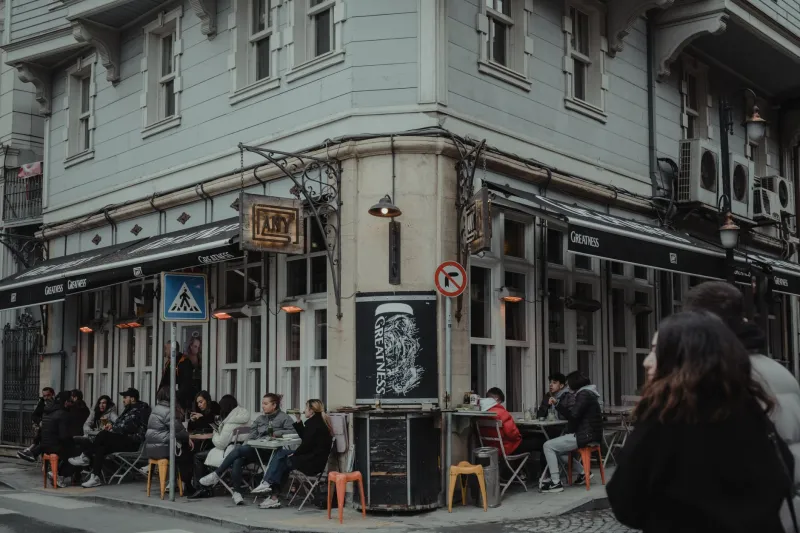
Photo by Photo by David Sury on Unsplash on Unsplash
There’s a certain kind of café furniture that does more work than any chalkboard or loyalty card. The long table. The one by the window, or near the back, with a mismatched set of chairs and a permanent faint ring where a thousand mugs have rested. In a neighbourhood café, it’s not just a place to perch. It’s a quiet experiment in social physics.
The Art of the Ask
You spot a free seat. There’s a person already installed with a laptop and a half-finished croissant. The dance begins. “Is this one free?” you ask, gesturing at the chair opposite. They glance up, nod, maybe shift a coat. That’s it. A contract signed without paper. In a city that can feel like a collection of closed doors, this tiny transaction matters. It’s the most British kind of intimacy — polite, provisional, and entirely voluntary.
The etiquette is subtle. You don’t just sit. You hover at the edge of their peripheral vision. You wait for eye contact. You ask, even if the chair is obviously empty. The question isn’t really about the chair; it’s about permission to enter someone’s orbit for the duration of a flat white. The answer is almost always yes, but the asking is the point.
The Coat-and-Bag Ballet
Once seated, the real choreography starts. Coats go over chair backs. Bags get tucked under tables or hung on hooks that are never quite where you need them. There’s a silent negotiation about space: whose elbow gets the armrest, how far the newspaper can spread, whether the sugar dispenser is communal property (it is) or personal territory (it isn’t). You learn to read the signs. A scarf draped over the adjacent chair means “saving for a friend.” A pair of headphones on means “don’t chat.” A dog lead looped around a table leg means “expect interruptions, and welcome them.”
The long table doesn’t erase boundaries. It just makes them visible, and therefore manageable. You share the salt, you don’t share the crumbs. You might move your cup an inch to make room for someone’s plate. These are small things, but they add up to a kind of civic muscle memory.
The Shared Pot
Nowhere is this clearer than with tea. A pot for one is a lonely thing. A pot for two — or three, if someone else joins — becomes a small ceremony. “Top-up?” you ask, tilting the pot towards your neighbour. They accept, or decline, and in that instant you’re no longer strangers. You’re people who have shared a beverage. In a café that sees the same faces week after week, these micro-interactions build a web. You might not know their name, but you know they take milk, no sugar, and always order the fruit scone.
This is the long table’s quiet magic. It doesn’t force friendship. It simply leaves the door ajar. On a Tuesday morning in November, when the rain is doing its best to flatten the high street, that ajar door can be the warmest thing in the room.
The Silence That Isn’t Awkward
There’s a particular quality to the silence at a shared table. It’s not the tense silence of a lift or the empty silence of an empty room. It’s a companionable quiet, punctuated by the clink of spoons and the hiss of the espresso machine. You can work, read, or just stare out of the window. No one expects you to perform. The long table is a place where you can be alone in public without feeling lonely — a rare and precious thing.
Of course, it’s not always silent. Some of the best conversations happen here, sparked by a shared complaint about the weather or a compliment on someone’s coat. The long table is a conversation starter that never has to try too hard. It just sits there, and people do the rest.
The Street’s Living Room
In a neighbourhood café, the long table often becomes a de facto community noticeboard. Lost gloves get left on it. Flyers for the local choir get stacked at one end. Someone might leave a book they’ve finished, with a note: “Free to a good home.” The table absorbs the street’s small dramas and quiet victories. It’s where the regulars gather for the crossword, where the mum with the pram can park up and feed the baby, where the retiree reads the paper and the student nurses a cold brew.
This is the quiet power of the shared table. It doesn’t need an events programme or a social media strategy. It works because it’s there, and because people — mostly — are decent. The rules are unwritten, but they’re understood: be considerate, be brief if you need to be, be open if you can be. In a world that increasingly asks us to book ahead and sit apart, the long table is a small act of resistance.
The Long Table’s Quiet Rules (a Non-Exhaustive List)
- Ask before you sit. Even if it’s obvious.
- Move your coat if someone needs the chair. Don’t make them ask twice.
- The sugar is communal. The last biscuit is fair game, but only after a decent pause.
- Headphones on means “I’m working.” Headphones off means “I’m open.”
- If you’re there for hours, order something else. The table is free; the seat isn’t a rent-free flat.
- Say goodbye when you leave. A nod will do.
Pull Up a Chair
The next time you’re in your local café and you see a long table with a spare seat, take it. You don’t need an invitation. You just need to ask. And as you settle in, you might notice something: the table isn’t just holding cups and plates. It’s holding the street together, one small, polite conversation at a time.